|
|
Chapter 4 Whats in a Name?
You may think that its hard to be a truly original writer but it isnt. Its impossible. Ideas grow out of other ideas which, in turn, have someone elses ideas attached to them. Some you share and some are personal. Your ears perk up when you hear your name. Your eyes take in more light when you see something or someone desirable. You pay extra attention when you see someone like yourself, someone who suffers what you fear, symbolizes what you hate or has what you wish you had. Some of that is going to show up in your writing whether you chose to
make it Do you think, for instance, that all the similarities between Morbius
and Altaira in Forbidden Planet, and Shakespeares Prospero and Miranda in The
Tempest Keep in mind the mirror that Mark Fuhrman wrote about in his book and all the opposites a mirror can stand for in a dream. Think of Lincolns dream of seeing two images of himself in a mirror, one clear and one faint. Keep in mind the pennies he saw on his eyelids as a corpse in a dream that confirmed the worst prophetic interpretation of his dream about the mirror. Keep in mind the white supremacy obsession of John Wilkes Booth, his violent hatred of "niggers" and the future he thought he was making for "the white race" by killing Lincoln. Think of what Fuhrmans image assassination of O.J. Simpson did for Booths cause. Think of the coins Mark Fuhrman found in Nicoles garage to
supported his idea What Mark Fuhrman wrote in his notes and in his first book about why and how O.J. Simpson committed murder has too much in common with the actions and evidence he is personally tied to and movies containing similar actions and evidence to be coincidental. The connections dont exist without his history, which includes being a motion picture fan, and the things he said and did in association with the case. The operative word is "association." When I started looking for someone who could have framed O.J., it quickly became evident to me that if he existed, he had to have qualities most people associate with an obsessive-compulsive personality. The only person involved in the case that I knew about who fit that description was Mark Fuhrman. He also had the military background associated with silent double kills committed by one well-positioned man with two knives, and the mirrored blunt force injury above and to the rear of both victims ears. It struck me that only a man trained with a knife as a stunner as well as a slashing and stabbing weapon would think of using a knife in that way and have the presence of mind to do it. In the movie O.J. was making in which he slit someones throat, he was taught an entirely different silent kill technique. Two reasons I made these connections are because I can be a tad obsessive-compulsive myself and I learned a thing or two about silent kills in the Army. As an engineer attached to an infantry company in Vietnam for the first half of 1971 I often took the last place in line on various combat missions. That left me vulnerable to the kind of attack suffered by Ron and Nicole. When I saw the computer animation of the killer in action Vietnam was the first thing I thought of. The second thing I thought of was Basic Training where the Army taught me various silent kill methods, including the use of a knife to stun and to kill. I said to myself, he moves like a soldier! If the computer model was anywhere near accurate it meant that the killer had to think like a soldier. That meant he had to have practiced like one well in advance. It meant that most of the wounds to Ron and Nicole other than the ones a soldier would deliver as sure kills were put there to camouflage the nature of the assault, the killers real expertise and his state of mind. Shortly after that eye-opening discovery, I learned that Mark Fuhrman had been a marine. He was, in fact, in training with the Marines the same year I was in combat with the Army. How could he not have known what I knew about silent kills and how much sense does it make for the rage killing he attributed to O.J. to have been carried out in virtual silence? If Fuhrman was the killer, we had something else in common that answered the question of why the killings took so long. Its called a combat high. Trust me, there is nothing in common experience to compare with it. To give you some idea of what an ecstatic experience it is, consider what Chuck Yeager said when he was asked about his most exciting experience. He didnt say it was breaking the sound barrier in the X-15. It was aerial combat fought to the death in WW II. For some people a combat high can be as addictive as crack cocaine. The trouble is you have to expose yourself to life-treating challenges to achieve it, preferably another human being or two or more. When I realized to my horror that I could have become a combat junkie if my whole unit hadnt been returned to the States six months into my tour, I saw a lot of things differently. I saw just how little separation there was between an ordinary man and a madman given the right genes to begin with and the right circumstances to put them in charge. I saw what it could do without a strong sense of moral obligation to keep it in check Perhaps a similar insight moved Robert Lewis Stevenson to write The Strange Case of Dr. Jekyll and Mr. Hyde. Perhaps thats why the writers of Forbidden Planet gave Morbius a murderous alter ego and why we were ready to believe on the strength of the shakiest evidence that O.J. had one, too. Perhaps thats why its such an enduring dramatic theme. It touches a cord deep inside many of us Some of us more than others. Mark Fuhrman talked a lot about his love of danger. On the McKinney
tapes he talked about thriving on situations where he might be badly outnumbered by
"niggers." He talked about relying on his own resources to pull him through
(like
In the 56 version of The Bad Seed, Monica Breedlove
played by Evelyn Monica loves murder mysteries and has a highly successful crime writer as a guest. She says, "he thrives on buckets of blood and sudden death." Her tenant and friend, Christine Penmark, has an aversion to violence of any kind. To help her get at the root of her condition, Monica suggests that she listen to the writers account of an infamous serial killera practical nurse named Anderson who poisoned nine peopleand "associate." Christine asks her what she means. She says, "Just speak up because any idea that comes into your mind will be an associated idea." Anderson is associated with The Bad Seed and Forbidden
Planet only by way of Mark Fuhrmans 1989 poison pen letter to the
Brentwood city attorney about O.J. and Nicole. Richard Anderson plays Chief Quinn,
one of 19 "competitively In the 1956 version of The Bad Seed, Rhoda Penmark takes her vitamins and tells her mother Christine, "I like the juice." Those are a hell of a lot of name associations, not counting Chris, as in Christopher Reeve, as in Superman. More about "Chris" later. For now, we want to concentrate on the concept of free association as a gateway to the subconscious mind. Free association is, in fact, one of Freuds proven techniques for
delving into the subconscious mind, a strange landscape populated by fears and longings Free association is where the phrase "Freudian slip" comes from. Its why Mark Fuhrmans words and deeds associated with the Bundy Murders and the Juice, as he called O.J. in his book, are so revealing. The only reason we can link Mark Fuhrman to Mark Hamels Ted Bundy in The Deliberate Stranger, is because Fuhrman called the killing of Ron and Nicole "the Bundy murders" and made references to the crime that were a closer match to scenes from the movie than the crime scenes. And, of course, theres the name Mark. But lets not forget Mrs. Breedloves problem of
"associating ideas with words and names" and the words she extracted from the
syllables of her husband Freds last name. Lets forget Scotland Yards
Fred Aberline for now. Lets not forget |

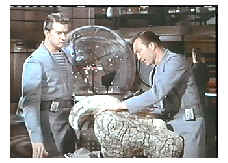 happen or not the
way "monsters from the id" show up in your nightmares. Like Morbius in
MGMs 1956 hit movie Forbidden Planet, we can be no more than
spectators to things that may come out of our subconscious minds when our creative engines
are running around on automatic pilot.
happen or not the
way "monsters from the id" show up in your nightmares. Like Morbius in
MGMs 1956 hit movie Forbidden Planet, we can be no more than
spectators to things that may come out of our subconscious minds when our creative engines
are running around on automatic pilot.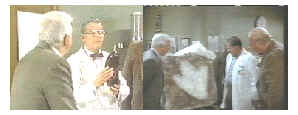 appeared by
accident? Could the scene in The Naked Gun (1988) with Ted the LAPD lab guy
showing Leslie Nielsen as Lt. Frank Drebin the Swiss Army shoe have borrowed nothing from
the doctor in Forbidden Planet showing Leslie Nielsen as Commander J.J. Adams a
plaster cast of the invisible monsters foot? If not, what of the scene in The
Naked Gun
appeared by
accident? Could the scene in The Naked Gun (1988) with Ted the LAPD lab guy
showing Leslie Nielsen as Lt. Frank Drebin the Swiss Army shoe have borrowed nothing from
the doctor in Forbidden Planet showing Leslie Nielsen as Commander J.J. Adams a
plaster cast of the invisible monsters foot? If not, what of the scene in The
Naked Gun  2
½ (1991) with the negative plaster mold of a mans shoe and a
dinosaurs foot where a positive cast from wet plaster pured in a cavity should have
been? If you didnt get the joke originally, you should get it now. Just reverse what
you see, like turning a girl into a boy or a comedy into a tragedy and youve got it.
Or you could simply compare the pictures.
2
½ (1991) with the negative plaster mold of a mans shoe and a
dinosaurs foot where a positive cast from wet plaster pured in a cavity should have
been? If you didnt get the joke originally, you should get it now. Just reverse what
you see, like turning a girl into a boy or a comedy into a tragedy and youve got it.
Or you could simply compare the pictures.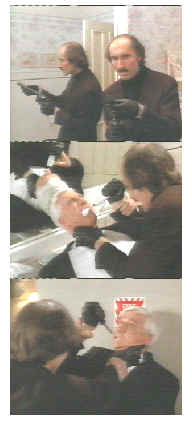 of a
killer in a panicone of which was a Lincoln penny. Think of the stories Fuhrman told
his West Side bar buddies and his fellow Police Protective League picnickers of
O.J.s escalating violence toward Nicole that must have seemed to them on the 13th
of June 1994 like a fulfilled psychic prediction. Think of the different directions from
which the stab wounds entered Ron Goldmans body and the five stab wounds in his
right cheek. Think of the fact that it was a silent kill in a small confined area where
Fuhrman says Ron came to Nicoles rescue. Think of the lost leather gloves and the
hair in the lost cap that came out of O.J.s head.
of a
killer in a panicone of which was a Lincoln penny. Think of the stories Fuhrman told
his West Side bar buddies and his fellow Police Protective League picnickers of
O.J.s escalating violence toward Nicole that must have seemed to them on the 13th
of June 1994 like a fulfilled psychic prediction. Think of the different directions from
which the stab wounds entered Ron Goldmans body and the five stab wounds in his
right cheek. Think of the fact that it was a silent kill in a small confined area where
Fuhrman says Ron came to Nicoles rescue. Think of the lost leather gloves and the
hair in the lost cap that came out of O.J.s head. the tall, smart, ,
handsome blacksmith in Birth of a Nation who tracked Gus the renegade negro
to a gin mill and beat up a dozen "black men" who seem to come out of nowhere
before one of them shot him in the back). To eliminate any question about the role he
later said he was "play acting" he said something else to underscore his love of
danger. It was more than mere talk to impress his public. It was talk that could have
landed him on death row if the wrong people picked up on the thread of associations it was
attached to and gave it a good tug.
the tall, smart, ,
handsome blacksmith in Birth of a Nation who tracked Gus the renegade negro
to a gin mill and beat up a dozen "black men" who seem to come out of nowhere
before one of them shot him in the back). To eliminate any question about the role he
later said he was "play acting" he said something else to underscore his love of
danger. It was more than mere talk to impress his public. It was talk that could have
landed him on death row if the wrong people picked up on the thread of associations it was
attached to and gave it a good tug. 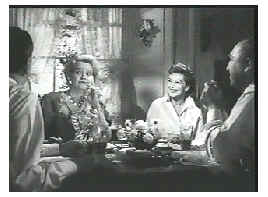 Varden
(The Night of the Hunter) is Christine (Nancy Kelly) Penmarks,
landlady. She has been psychoanalyzed extensively "from New York to Los
Angeles." Monicas analyst showed her that her "whole trouble was
associating ideas with words and names. "My marriage to Fred Breedlove, for example.
He said I married Fred because of the combination of ideas suggested by his name. The last
syllable, love; romantic, eternal. And the first syllable
Umm. That is rather
obvious, isnt it."
Varden
(The Night of the Hunter) is Christine (Nancy Kelly) Penmarks,
landlady. She has been psychoanalyzed extensively "from New York to Los
Angeles." Monicas analyst showed her that her "whole trouble was
associating ideas with words and names. "My marriage to Fred Breedlove, for example.
He said I married Fred because of the combination of ideas suggested by his name. The last
syllable, love; romantic, eternal. And the first syllable
Umm. That is rather
obvious, isnt it." 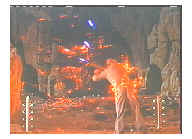 selected, super perfect, physical specimens," aboard Leslie
Nielsens spaceship. All of them are, coincidentally, white males. The evil self of
Morbius literally steps out of a nightmare and murders Quinn. Quinn had a shipmate named Nichols
and a superior officer named Farman played by Jack Kelly. Farman
tangles with the monster when the juice from an electric barrier makes it
visible and it kills two of his shipmates.
selected, super perfect, physical specimens," aboard Leslie
Nielsens spaceship. All of them are, coincidentally, white males. The evil self of
Morbius literally steps out of a nightmare and murders Quinn. Quinn had a shipmate named Nichols
and a superior officer named Farman played by Jack Kelly. Farman
tangles with the monster when the juice from an electric barrier makes it
visible and it kills two of his shipmates. 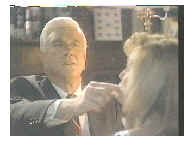 sometimes hidden behind masks
of symbolism like some of the sexually suggestive scenes in The Naked Gun 2 ½.
As far as Freud was concerned, nearly everything a human being said or did could be
interpreted as sexually symbolic. Then again, as he said with a smile between draws on his
trademark cigar, "sometimes a cigar is a cigar."
sometimes hidden behind masks
of symbolism like some of the sexually suggestive scenes in The Naked Gun 2 ½.
As far as Freud was concerned, nearly everything a human being said or did could be
interpreted as sexually symbolic. Then again, as he said with a smile between draws on his
trademark cigar, "sometimes a cigar is a cigar." 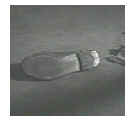 Mark Fuhrmans violently racist tirade in
1986 as his response to Kathleen Bells question about mixed couples being in love or
the "rather obvious" racial consequences of their breeding. Lets not
forget that Mrs. Breedlove was talking to Christine Penmark, the mother of a
little girl who beat a little boy bloody on a pier (O.J. in The Naked Gun) with the
heel of her shoe over a penmanship medal she tho
Mark Fuhrmans violently racist tirade in
1986 as his response to Kathleen Bells question about mixed couples being in love or
the "rather obvious" racial consequences of their breeding. Lets not
forget that Mrs. Breedlove was talking to Christine Penmark, the mother of a
little girl who beat a little boy bloody on a pier (O.J. in The Naked Gun) with the
heel of her shoe over a penmanship medal she tho